What Is Reiki? A Gentle Introduction

Updated: 3 hours ago
The practice of "laying hands" on someone for comfort or healing has existed for thousands of years, across many cultures and spiritual traditions, including those of India and the East. Reiki is a more recent system within that wider story, developed in Japan in the early 20th century.

Think about how naturally we reach out to touch someone who is hurting. We place a hand on their shoulder, hold their hand or gently comfort them through touch. It's one of our oldest and most instinctive ways of expressing care and connection.
As humans, we tend to understand the world through what we can see, touch and physically experience. But quantum physics offers another perspective. It shows us that everything around us, including our own bodies, is made up of atoms and particles, and that energy plays a fundamental role in how the universe works.
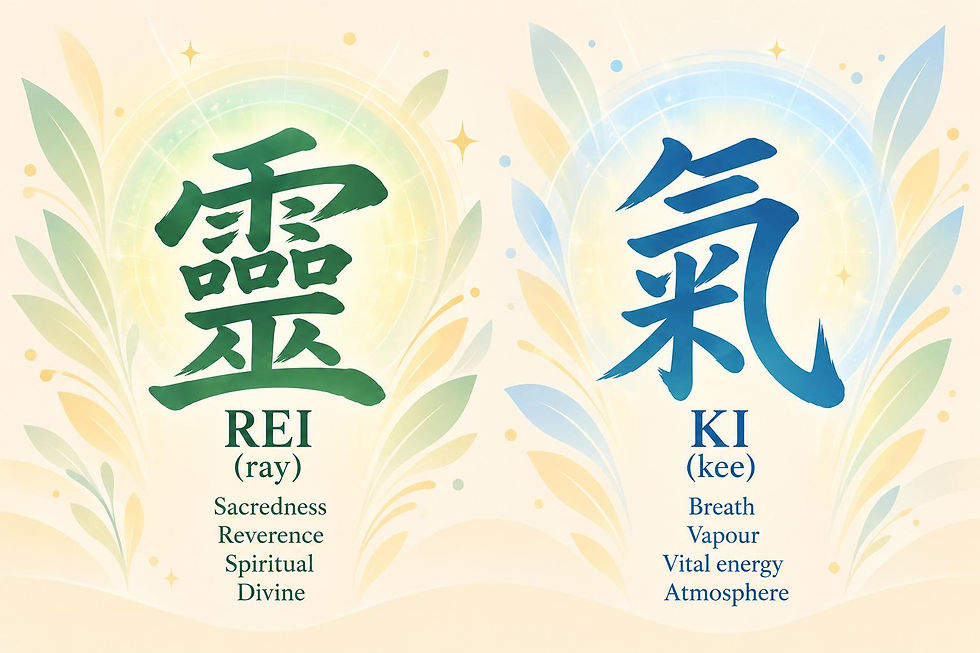
In the early 20th century, Mikao Usui in Japan developed a set of techniques to make working with energy structured and accessible to everyone. As the practice spread beyond Japan, it became widely known as Reiki, a name made up of two Japanese characters. Together, they are described as universal life force energy.
What Is Energy Healing?
The idea of exchanging energy may sound unusual, but think about your everyday experiences. Have you ever spent time with someone and walked away feeling completely drained? Or spent time with someone else and felt happier and energised? Perhaps you've taken a walk in nature and returned feeling calmer, less stressed and more clear-minded.
Every person has access to energy. In Reiki, we believe that we do not heal people ourselves. Instead, the practice supports the body's natural ability to find balance and restore itself.
Think about what happens when you have an injury. Your body immediately begins its own healing process, often without you even being aware of it. Our minds and bodies are connected in ways we don't always consciously recognise.
Reiki Lineage And Attunement
In traditional Reiki, practitioners receive an attunement from a Reiki Master as part of their training. An attunement is a guided process through which the Master passes the practice on to the student. It follows a period of learning and practising Reiki techniques, which may include assessments to demonstrate their understanding and ability.

There Is More to Life Than What We Can See
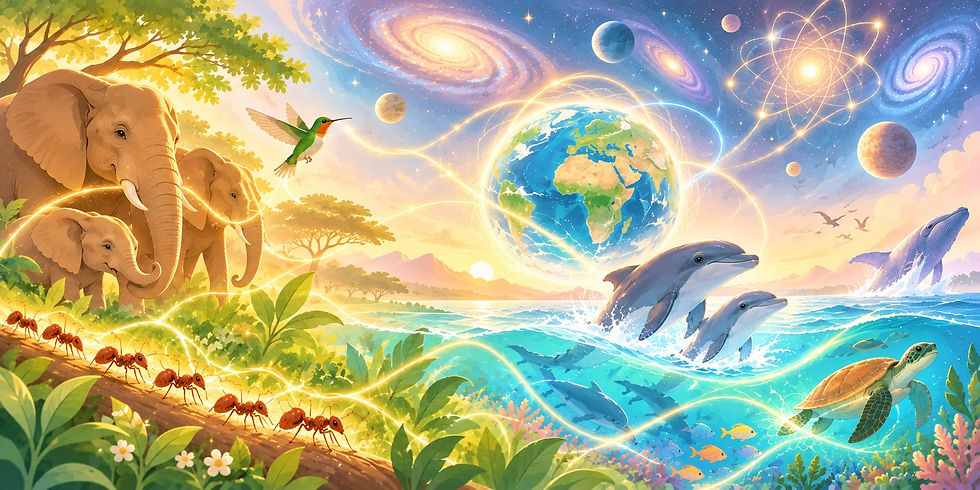
Now think about how we communicate. Most of us use spoken language, but someone who cannot see may use Braille, while someone who cannot hear may communicate through sign language. Nature has its own ways of communicating too. Animals use sounds and vibrations, while plants and flowers use colours and chemical signals to attract or respond to the world around them. In different ways, information is constantly being exchanged, sometimes through signals we cannot even detect with our own senses.
So, what does this mean for us?
We have far more potential to understand ourselves and the world around us than we often realise. Think about that feeling you get when someone walks into a room, even before you turn around. Or that instinct that tells you something isn't quite right, even when you cannot explain why.
We often call this intuition. We often call this intuition. In my practice, I think of it as a quieter way of communicating that we can learn to notice again.
Experience Reiki For Yourself

If you're curious about Reiki and would like to experience it for yourself, I would be honoured to be your personal practitioner. I offer both in-person and online (global) sessions, so you can choose what feels most comfortable.
Frequently Asked Questions
What Happens In A Reiki Session?
Sessions usually last 60 minutes. You will be comfortable and fully clothed, either lying down or seated, and I will guide you through the session gently, with light touch or a little distance between us, whichever you prefer. Many people describe feeling deeply relaxed, warm or calm. Some fall asleep, and that is perfectly fine. Afterwards, we take a few quiet moments to talk about your experience. Some people come for a single session, while others enjoy regular sessions. There is no pressure either way.
Can Reiki Be Done From A Distance?
Yes. Distance Reiki, also known as absent healing, is a traditional practice that allows Reiki to be offered without the practitioner and recipient being physically together. Some clients prefer distance sessions because they can experience Reiki in the comfort of their own homes. They can remain in their relaxed state, continue resting or even fall asleep afterwards, without needing to travel or drive immediately after their session.
Do I Need To Have Religious Beliefs?
No. Reiki is not associated with any particular religion, and you do not need to follow a specific faith or hold spiritual beliefs to experience it. Reiki welcomes people from all religious and cultural backgrounds.
Does Reiki Use Symbols Or Objects?
Yes, traditional Reiki uses symbols as part of its practice. However, I respect each person's beliefs and preferences. If you are uncomfortable with the use of symbols, I can adapt the session by using words and intentions instead.
The most important thing is that you feel comfortable, respected and safe throughout your experience.
Does Reiki Replace Medical Care?
No. Reiki is a complementary practice that supports relaxation and wellbeing. It does not replace medical or psychological care, and I would always encourage you to continue with any treatment recommended by your doctor or health professional.
Comments